How Long Does Peel And Stick Roofing Last?
Fortunately, peel-and-stick roofing is well-known for its simplicity, but over time, its reliability has become questionable. Although it’s promoted as a long-lasting solution, its actual lifespan depends heavily on proper installation and climate exposure. Under harsh conditions, it can wear down faster than expected, leading to leaks and costly repairs. So, is peel-and-stick roofing truly a temporary fix or a long-term investment?
What is Peel and Stick Roofing, and Is It Reliable?
When it comes to roofing, homeowners and builders want something affordable, durable, and easy to install. Peel-and-stick roofing is popular as a quick solution, but many wonder about its true lifespan.
Peel-and-stick roofing is a self-adhesive membrane that eliminates the need for nails or traditional adhesives. Commonly used as underlayment for low-slope roofs, metal roofs, or shingles, it provides an extra waterproof barrier. But does its ease of installation come at the cost of durability? Let’s break it down.

Is Peel and Stick Roofing Durable?
Durability is a top concern when investing in a roof. No homeowner wants to replace their roof just a few years after installation. While peel-and-stick roofing is quick and effective, its lifespan is limited.
With proper installation, high-quality materials, and regular maintenance, peel-and-stick roofing can last 15–30 years. However, is it the best option for your home? Let’s explore further.
Thinking about replacing your old roof? Contact our experts for professional roofing services to find the best long-term solution for your home.
What Factors Affect Peel and Stick Roofing Lifespan?
1. Does Quality Matter?
Absolutely. Not all peel-and-stick roofing products are created equal. Higher-quality materials perform better under extreme weather and last longer. Cheaper options tend to break down quickly, causing leaks and damage.
Tip: Choose premium membranes with UV resistance and strong waterproof properties for the best results.
2. Does Weather Impact Its Longevity?
Definitely. Extreme temperatures, heavy rainfall, and intense sunlight can shorten the lifespan of peel-and-stick roofing. In states like Florida, Texas, and Arizona, where heat and humidity are high, correct installation is crucial to prevent early wear.
In colder regions, snow, ice, and temperature changes can cause expansion and contraction, affecting durability over time.
3. Can Poor Installation Cause Early Failure?
Yes. Even the best peel-and-stick roofing will fail if installed incorrectly. Air bubbles, poor sealing, or an unclean surface can lead to peeling and water intrusion.
DIY Installation Tip: Always follow manufacturer guidelines or hire professionals to ensure longevity.
Is Peel and Stick Roofing Better Than Traditional Roofing?
Can It Be Used Under Metal Roofs?
Yes. Peel-and-stick underlayment is often used under metal roofs to provide waterproofing, improve energy efficiency, and reduce heat absorption.
Is It Good for DIY Homeowners?
Peel-and-stick membranes are easier to install than traditional roofing materials, making them a great option for DIY enthusiasts. However, surface preparation and precise application are essential to avoid problems.
Types of Peel and Stick Roofing
| Type | Material | Durability | Waterproofing | Cost |
|---|---|---|---|---|
| Rubberized Asphalt | Rubber/Asphalt | High | Excellent | Medium |
| Synthetic Underlayment | Synthetic Fibers | Medium | Good | Low |
| Peel and Seal Roofing | Aluminum Foil | Medium | Excellent | High |
Choosing the Right Product
- Climate: Choose materials that suit your local weather.
- Budget: Consider the balance of cost, features, and durability.
- Ease of Installation: Pick what aligns with your skills or project needs.
Pros & Cons of Rubberized Asphalt Roofing
Pros
- Highly durable
- Excellent waterproofing
- Versatile for different roofs
Cons
- Higher cost
- Requires careful installation
How to Extend Peel and Stick Roofing Lifespan
Regular Maintenance
Yes! Neglecting your roof shortens its life. Check your roof yearly to:
- Remove debris to prevent damage
- Check for water pooling and fix drainage issues
- Seal minor cracks or tears immediately
Add a Reflective Coating
Using UV-reflective coatings reduces heat absorption and extends lifespan, especially in hot and sunny climates.
Reapply or Replace?
Depending on its condition, peel-and-stick roofing can often be reapplied over the existing layer instead of full replacement. However, it must still provide adequate protection.
Common Peel and Stick Roofing Problems

Does It Shrink Over Time?
Some low-quality products shrink, creating gaps and exposing the roof to leaks. Avoid this by choosing reputable brands and ensuring proper installation.
Is It Prone to Wind Damage?
Strong winds can lift poorly adhered areas, leading to leaks. Ensure strong adhesion and edge sealing, especially in storm-prone areas.
Is It Suitable for Commercial Buildings?
Yes. Peel-and-stick membranes are widely used for flat commercial roofs due to their durability and waterproofing benefits.
Is Peel and Stick Roofing Waterproof?
Yes, peel-and-stick roofing is designed to be highly waterproof. Its self-adhesive backing creates a tight seal that prevents water from seeping through gaps, nail holes, or seams. This makes it far more effective than traditional felt paper in moisture-prone areas.
Because it bonds directly to the roof deck, it forms a continuous water-resistant barrier. This is especially useful in regions that experience heavy rainfall, snow accumulation, or ice dams. Many premium peel-and-stick products are also resistant to standing water, offering extra protection against leaks.
That said, its waterproof performance depends heavily on correct installation. Poor surface preparation or weak edge sealing can reduce effectiveness. When installed properly, peel-and-stick roofing provides long-lasting and reliable waterproof protection.
Which Is Better: Peel and Stick or Synthetic Underlayment?
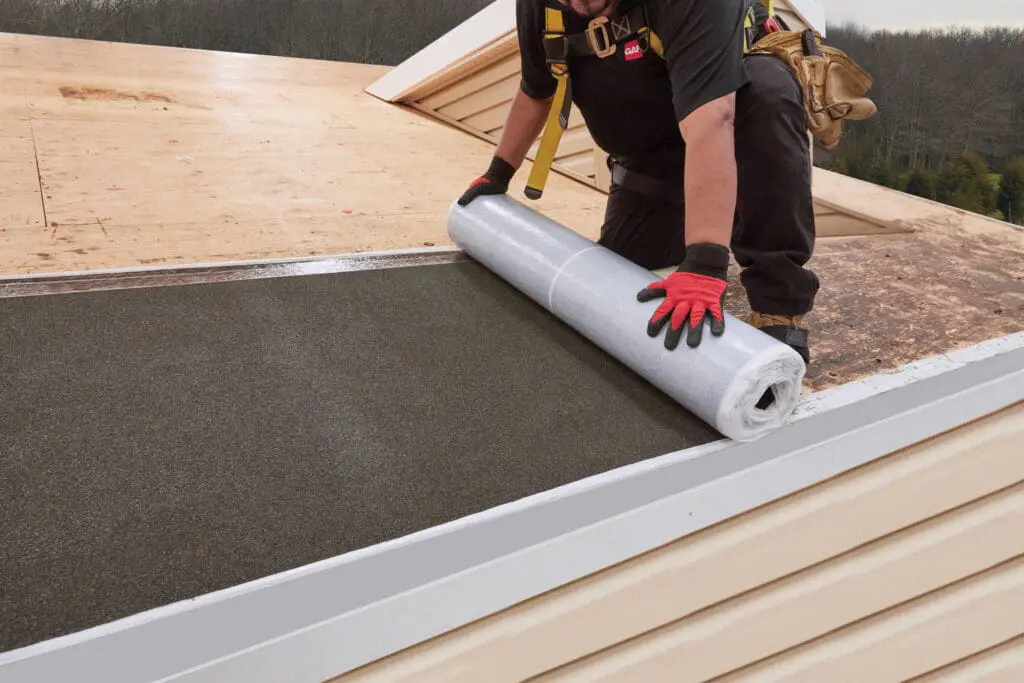
Both peel-and-stick roofing and synthetic underlayment serve important roles, but the better option depends on your roofing needs, climate, and budget.
Peel-and-stick roofing offers superior waterproofing because it seals directly to the roof deck and self-seals around fasteners. It’s ideal for roof valleys, eaves, low-slope roofs, and areas exposed to harsh weather. While it costs more, it provides better long-term protection.
Synthetic underlayment is lighter and more budget-friendly. It’s easy to install and works well in moderate climates, but it does not self-seal around nails, making it less effective against water intrusion.
In summary:
Peel and stick roofing is best for maximum waterproofing and extreme weather
Synthetic underlayment is suitable for cost-effective, standard roofing projects
Many roofing professionals use both peel-and-stick in vulnerable areas and synthetic underlayment elsewhere—for optimal performance.
Final Verdict: Is It Worth It?
Peel-and-stick roofing is popular for its ease of use, waterproofing, and durability. When installed correctly and maintained well, it can last up to 30 years and is a cost-effective roofing option for many homeowners and businesses.
Ready to install peel-and-stick roofing? Contact a trusted roofing company today for professional installation and peace of mind.
Read Next: