

8 Gutter Problems Toledo Homeowners Deal With Every Year
Most gutter failures in Toledo trace back to one of eight specific causes: tree debris clogging the channel, ice forming inside a clogged run, hangers pulling loose after years of freeze-thaw, fascia rot from water sitting against the wood, cracked seams on older sectional systems, gutters hung without enough pitch to drain, gutters sized too small for the roof they’re draining, and downspouts dumping water right next to the foundation. Each one has a distinct fix, and most homeowners are dealing with two or three of these at once without realizing they’re separate problems.
Request a free gutter inspection
Tree Debris Clogging the Gutter Line
Toledo’s mature tree canopy is the single biggest driver of gutter clogs. Maple seed pods mat over the channel in late spring, oak and elm leaves fill it solid through October and November, and slower-dropping leaves keep adding debris into December. A gutter packed with wet leaves holds water instead of moving it, and once that water freezes, it stops draining entirely.
Cleaning three times a year, once after seed drop, once before peak leaf fall, and once before the first hard freeze, keeps most Toledo gutters functional. For homes with heavy tree cover where that schedule isn’t realistic, gutter guards stop the debris from getting in rather than requiring it to be removed after the fact.
Ice Forming Inside a Blocked Gutter
A gutter clogged with debris going into winter has nowhere for meltwater to go during the brief warm spells that happen between cold snaps. That water sits, refreezes, and adds weight the gutter system was never built to carry. Ice buildup here is also a direct contributor to ice dams at the roofline, since water backed up in a frozen gutter has to go somewhere, and that somewhere is often under the shingle edge.
The fix works on two fronts. Clear gutters before the first hard freeze, and check that attic insulation meets Ohio’s Climate Zone 5 target of R-49 to R-60, since a warm roof deck is what generates the meltwater feeding the ice in the first place. We handle both gutter work and blown-in attic insulation on the same visit when a home needs both.
Hangers Pulling Loose From the Fascia
Older Toledo homes typically have spike-and-ferrule hangers, a nail driven straight through the gutter face into the fascia board. Every freeze-thaw cycle works that nail a fraction looser. After two or three decades of Ohio winters, enough hangers have failed that the gutter sags between the remaining ones, collects standing water at the low point, and pulls further away with every added pound of ice.
Hidden hanger brackets solve this permanently, since they screw directly into solid fascia rather than relying on a nail through sheet metal. We replace spike-and-ferrule systems with hidden hangers on every gutter we install.
Rotted Fascia Behind the Gutter
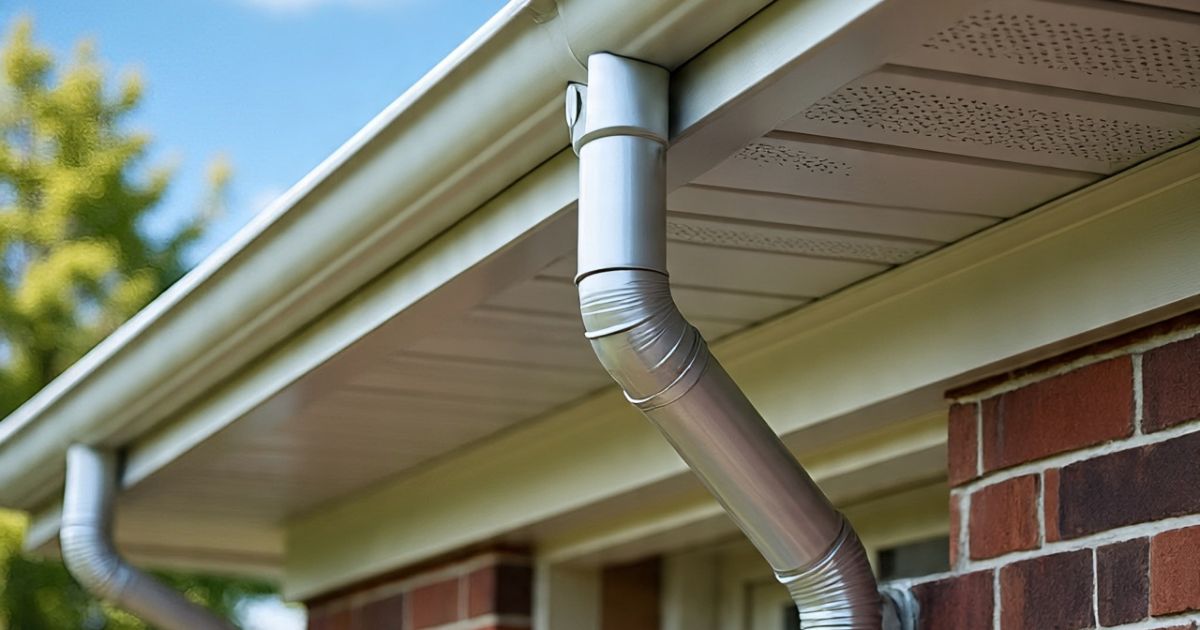
Once a gutter starts sagging, overflowing, or pulling away, water runs directly against the fascia board on every rain event instead of into the gutter. Painted wood fascia on older Toledo homes cannot take that kind of repeated soaking. The paint fails, the wood swells, and rot sets in exactly where the gutter brackets need something solid to anchor into.
New gutters hung on rotted fascia fail again within a season or two, so we check fascia condition on every estimate and price any needed repair as part of the same job rather than installing over a problem we already found.
Failing Seams on Older Sectional Gutters
Homes built before the 1990s commonly have gutters assembled from 10-foot sections joined with caulk or butyl sealant. That sealant hardens and cracks after a decade or more of expansion and contraction through Toledo winters, and once it fails, water drips out at every joint instead of reaching the downspout. That drip line is often the direct cause of the fascia rot described above.
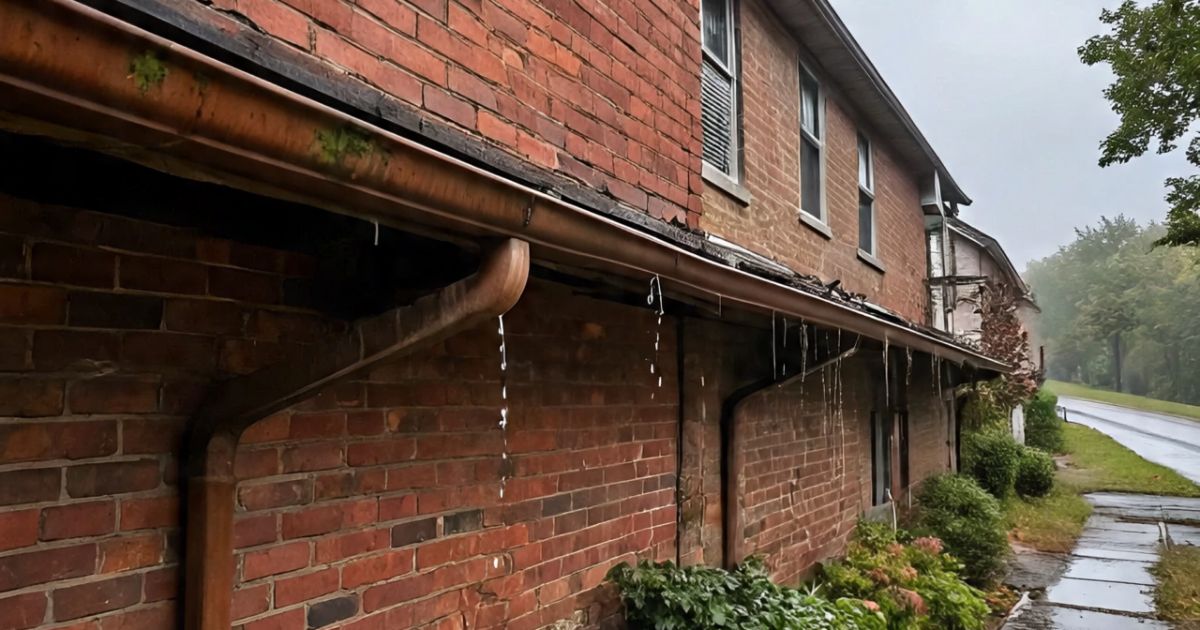
Seamless gutters remove the problem at the source. We cut every run to the exact length of the roofline on site, so the only seams in the entire system are at corners and downspout connections, not every 10 feet along a straight run.
Gutters Hung Without Enough Pitch
A gutter needs a slight, consistent slope toward the downspout to drain completely. One that was installed level, or that has settled unevenly over time, holds standing water between rain events. That water freezes in winter, adds weight at the low point, and accelerates the same hanger failure and fascia rot already described.
We verify pitch during installation and confirm full drainage before leaving the job. Existing gutters with the wrong pitch can often be corrected without full replacement, and we assess that as part of every free inspection.
Gutters Too Small for the Roof They Drain
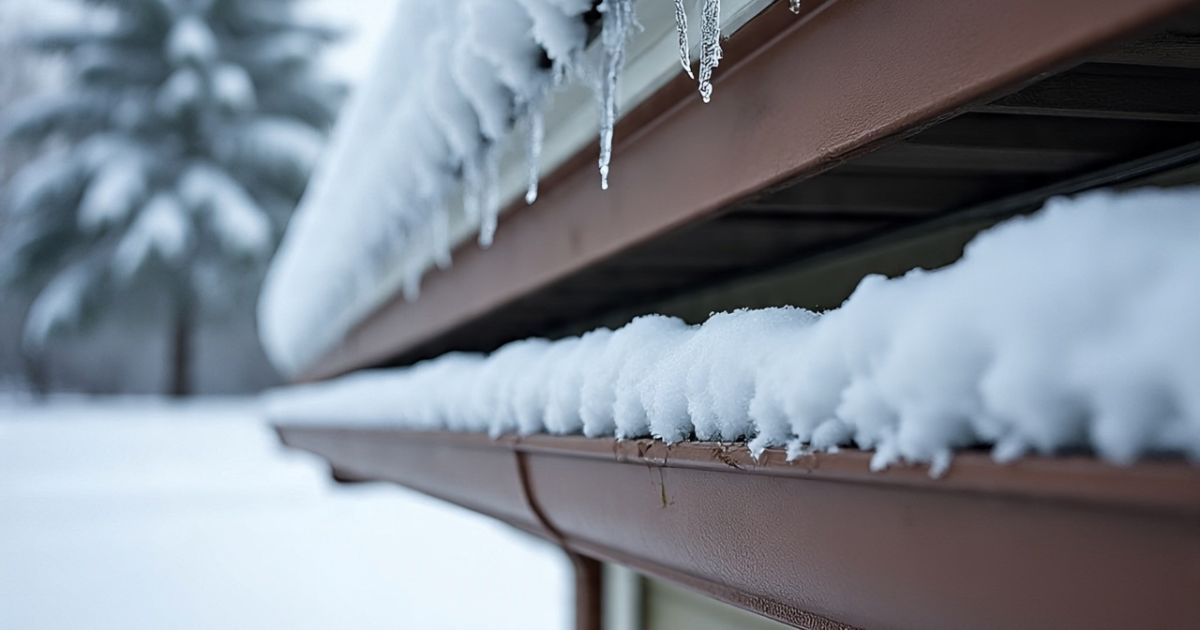
Five-inch gutters were standard on Toledo homes for decades, and on a smaller roof they’re still fine. On a larger roofline or a steep pitch, a 5-inch gutter reaches its capacity fast during a heavy downpour and overflows the front edge before the water ever reaches the downspout. When that happens, the gutter isn’t doing its job for the rest of that storm.
Six-inch K-style gutters handle meaningfully more volume and have become the standard recommendation for larger Toledo roofs. We size every installation to the actual roof area and pitch, not a one-size default.
Downspouts Discharging Too Close to the Foundation
A downspout that empties water within a foot or two of the house sends that entire volume straight into the soil against the foundation wall. On flat lots without much grade to carry water away, that repeated saturation puts pressure on the foundation over time, and it’s one of the more common reasons homeowners see moisture in the basement after a hard rain with no other obvious cause.
Extensions that carry water at least four to six feet from the house solve most cases. On lots where the grade actually slopes toward the foundation, underground drainage to a discharge point further away is the right fix. We position every downspout correctly as part of installation, not as an afterthought.
Free Gutter Inspection in Toledo
Most Toledo homeowners live with two or three of these problems at once without knowing which is which, or what it costs to fix. We inspect the full system, document what we find, and give you a written estimate before anything is decided.
Call 419.475.9600 or request a free inspection online. We also pair gutter replacement with roof work when both are due, since doing them together costs less than two separate visits.
Frequently Asked Questions
What causes most gutter problems in Toledo homes?
Tree debris, freeze-thaw damage to hangers and seams, gutters sized too small for the roof, and downspouts placed too close to the foundation account for nearly every gutter call we get in Toledo. Most homes have more than one of these happening at once.
How often should I clean my gutters in Toledo?
Three times a year works for most homes with mature trees nearby: once after spring seed drop, once before peak fall leaf drop, and once before the first hard freeze in December.
Why do my gutters keep pulling away from the house?
Older spike-and-ferrule hangers work loose over repeated freeze-thaw cycles. We replace them with hidden hanger brackets that anchor directly into solid fascia and hold through Ohio’s ice load.
What size gutters do I need for a Toledo home?
It depends on roof size and pitch. Five-inch gutters are adequate on smaller roofs, but larger or steeper rooflines need 6-inch K-style gutters to handle heavy rain without overflowing. We size every job to the actual roof, not a default.
Why is water getting into my basement after it rains?
Downspouts discharging too close to the foundation are one of the most common causes, especially on flat lots without much grade to carry water away. Extending downspouts four to six feet from the house resolves most cases.
Does Pro Craft offer free gutter inspections?
Yes, with a written estimate before any work is scheduled. Call 419.475.9600 or request one online.



Leave a Reply