
Are Gutters Necessary? What Toledo, Ohio Homeowners Need to Know
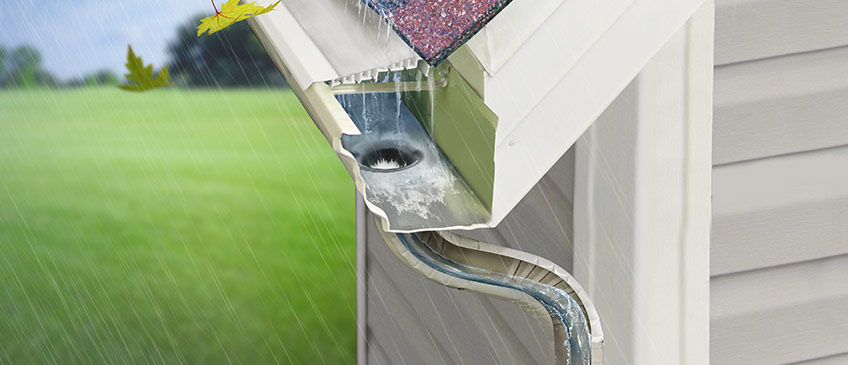
For the vast majority of Toledo, Ohio homes, gutters are necessary. Toledo receives 34 inches of annual precipitation plus lake-effect snow and ice melt events throughout winter and spring. A standard 2,000 square foot single-story home routes over 42,000 gallons of water off the roof every year.
Without a gutter system directing that volume away from the foundation, the water dumps in a concentrated sheet along the full perimeter of the home on every rain event. Foundation damage, fascia rot, basement flooding, and soil erosion around the structure follow. The exceptions where gutters matter less do not apply to Toledo’s climate or terrain.
What Happens to a Toledo Home Without Gutters
When a roof has no gutters, every rain event sends water sheeting off the eave edge in a concentrated line directly against the soil and structure below. In Toledo’s flat terrain, that water has no natural slope to carry it away from the foundation. It pools against the foundation wall, saturates the soil, and finds the path of least resistance into the basement.
The specific damage patterns Pro Craft sees on Toledo homes that have been without gutters for multiple seasons follow a consistent progression. First, soil erosion creates channels in the ground directly below the roofline where water has been hitting the same spot for years. Second, the foundation wall develops efflorescence, the white mineral staining that shows water has been pushing through the concrete or block. Third, basement walls on the side of the house that takes the most rainfall show moisture infiltration or active seepage.
Fourth, the fascia boards along the eave edge begin to rot where water is backing up against the wood instead of flowing into a gutter. Each of these problems costs significantly more to fix than a properly installed gutter system costs to prevent.
Why Toledo’s Climate Makes Gutters Non-Negotiable
Toledo receives 34 inches of annual precipitation spread across all four seasons. Unlike markets where rainfall is concentrated in a wet season followed by a dry period, Toledo gets consistent precipitation year-round. There is no dry season during which a foundation can recover from moisture saturation. Rain in spring, summer, and fall is followed by freeze-thaw cycling in winter that pushes water into any crack that formed during wet months.
The lake-effect factor makes Toledo’s situation more demanding than most of inland Ohio. Lake Erie moisture systems produce heavy precipitation events that can drop significant rain in a short period. A gutter system that is undersized, clogged, or failing during a lake-effect rain event overflows, which is functionally the same as having no gutters at all for the duration of that event. The volume of water a Toledo home’s roof collects during a heavy rain is substantial.
A 2,000 square foot roof collecting one inch of rainfall produces approximately 1,250 gallons of runoff from a single rain event. Over a full year of Toledo precipitation, that roof routes over 42,000 gallons of water that needs to go somewhere. A properly functioning gutter system with correctly positioned downspouts sends it away from the structure. Without gutters, all of it goes directly against the foundation.
The Specific Gutter Problems Toledo Homes Face
Fascia rot from debris buildup. The most common damage pattern Pro Craft sees on Toledo homes with poorly maintained or failing gutters is rotted fascia behind the gutter line. Autumn leaf fall in Toledo neighborhoods like Ottawa Hills and Old West End produces substantial debris load. A gutter packed with leaves from November through March holds that organic material in constant contact with the fascia board for five months.
The moisture from wet leaves breaks down the wood behind the gutter bracket points. By spring, the fascia is soft enough that the gutter bracket pulls through the wood. The gutter separates from the fascia, water runs directly behind it, and the damage accelerates.
Ice dam formation from clogged gutters. A gutter that is full of debris and frozen solid in January cannot accept the snowmelt coming off the roof when daytime temperatures briefly rise above freezing. The water backs up along the eave, refreezes at the cold edge, and the ice dam that forms forces water under the first course of shingles.
This is the connection between gutter condition and roof damage that most Toledo homeowners do not make until they have a ceiling stain in February.
Icicles as a warning sign. Large icicles forming along the eave of a Toledo home in winter are not just a seasonal aesthetic. They are a sign that water is not draining through the downspouts and is instead refreezing at the gutter edge.
If the gutters are clogged, the icicle weight can pull the gutter away from the fascia. If the gutters are clear and icicles are still forming, the issue is attic heat loss creating the melt cycle. Both situations need addressing before the next winter season.
Overshooting during heavy rain events. Standard 5-inch K-style gutters installed on Toledo homes before 2000 are undersized for the volume of water that lake-effect rain events produce. During a heavy summer downpour, a 5-inch gutter on a steeply pitched roof cannot accept water fast enough and it overflows the front edge.
The water hits the ground below the roofline rather than the downspout. This is functionally the same as having no gutter for the duration of that event. Six-inch gutters are the current standard recommendation for northwest Ohio homes specifically because of this volume issue.
When Are Gutters Less Necessary
There are genuine situations where gutters matter less. Pro Craft installs gutters across Toledo and northwest Ohio and we tell homeowners honestly when the case for gutters is less urgent.
Homes with very wide overhangs that extend 18 to 24 inches or more push water further from the foundation than a standard overhang does. On a home with 24-inch overhangs and excellent lot grading that slopes away from the foundation on all sides, the water lands further from the structure and the grade carries it away. Gutters still add protection but the urgency is lower.
Homes on sloped lots where the natural grade directs water away from the foundation on every side. If your lot has a consistent downward slope away from the house in all directions, water sheeting off the roof lands on a surface that is already moving water away from the structure. These properties exist in Toledo but they are not common. Most Toledo lots are flat.
Newly graded properties where the builder created an aggressive drainage slope away from the foundation. This grading compacts and settles over years. What was sufficient drainage in year one is often not sufficient in year ten.
The honest answer for almost every Toledo homeowner asking whether they need gutters is yes. The terrain is too flat and the annual precipitation too consistent for the exceptions to apply. If you are unsure whether your property falls into one of the exception categories, Pro Craft assesses the grading and drainage situation during a free inspection. Call 419.475.9600.
Does My House Need Gutters on Every Side
This question comes up regularly from Toledo homeowners who have gutters on the front of the house but nothing on the sides or rear. The front gets gutters because it faces the street and the homeowner sees it. The rear and sides get skipped because the previous owner never installed them or they were removed at some point.
The foundation runs the full perimeter of the home. The fascia is the same material on every side. The roof sheds the same volume of water regardless of which slope it is on. A rear slope without gutters is doing the same damage to the rear foundation and rear fascia that a front slope without gutters would do to the front. If your Toledo home has gutters on the front and nothing on the rear or sides, look at the condition of the rear fascia boards, check the soil grade directly below the rear roofline for erosion channels, and look at the rear basement wall for moisture staining after a heavy rain event.
Pro Craft installs seamless gutters in Toledo on every roofline that needs them, not just the street-facing elevation.
What Size Gutters Does a Toledo Home Need
Gutter sizing is based on roof area, roof pitch, and local rainfall intensity. Standard 5-inch K-style gutters were the baseline for most residential construction in northwest Ohio through the 1990s. They are undersized for the rainfall volume Toledo receives during heavy precipitation events.
Six-inch K-style gutters are the current standard recommendation for Toledo homes. A 6-inch gutter handles approximately 40 percent more water volume than a 5-inch gutter. The difference between a 5-inch and 6-inch gutter is not visible from the street. The difference in performance during a lake-effect rain event is significant.
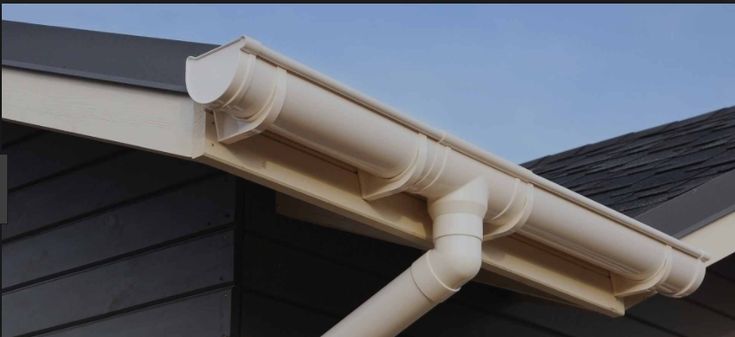
K-style gutters are the most common profile in Toledo. The flat back mounts flush against the fascia and the front profile mimics crown molding. They are the practical standard for most Toledo residential construction because they move water efficiently and are available as seamless aluminum in any length.
Half-round gutters are the original profile and the correct choice for older Toledo homes in historic neighborhoods like Old West End and Vistula where the architectural style calls for a traditional look. They move water slightly less efficiently than K-style but are appropriate for certain roof pitches and period-correct aesthetics.
Aluminum is the practical standard material for most Toledo homes. It does not rust, holds paint well, and handles Ohio’s freeze-thaw cycles without becoming brittle. A properly maintained aluminum seamless gutter system lasts 20 years or more.
Copper is the premium choice for historic properties and custom builds where the aesthetic warrants the higher cost. Copper gutters patina over time, are fully solderable at seams rather than using sealant, and last 50 years or more.
Pro Craft installs seamless gutters cut on site in Toledo. No seams means no sealant failure points along the run. Every run is cut to the exact length of the roofline, pitched correctly to drain completely, and secured with hidden hangers rated for Toledo’s ice load.

Seamless Gutters vs Sectional Gutters in Toledo
Most Toledo homes built before 1990 have sectional gutters with visible seams every 10 feet where the gutter sections join. Every seam is a sealant joint. Every sealant joint is a potential leak point. In Toledo’s freeze-thaw climate, that sealant expands and contracts with every temperature swing from January through March. After 10 to 15 years, the sealant at the joints deteriorates and the sections begin leaking at every connection point.
Seamless gutters eliminate this problem. Pro Craft cuts every run on site from a continuous coil of aluminum to the exact length of the roofline. One piece from corner to corner with no sealant joints in the middle of the run. The only joints in a seamless gutter system are at the corners and downspout outlets, which are the minimum unavoidable connection points. Those joints are sealed and mitered correctly by Pro Craft at installation.
For Toledo homeowners who have been repeatedly resealing the joints on sectional gutters every few years, seamless gutter replacement is the permanent solution to the leak cycle. Request a free estimate on seamless gutter installation in Toledo.
Do Gutter Guards Help on Toledo Homes
The question Pro Craft gets most often alongside gutter installation is whether gutter guards are worth the additional cost. The answer depends specifically on what kind of debris the property produces.
Toledo neighborhoods with mature oak, maple, and elm tree cover produce substantial leaf fall from late September through November. A gutter without protection fills with leaves within days of cleaning during peak fall season. That debris load sits in the gutter through winter, holds moisture against the fascia, and creates the conditions for ice dam formation at the eave.
Gutter guards that use a micromesh surface over the gutter opening allow water in while shedding debris off the face. On a Toledo property with significant tree cover, a properly installed micromesh guard system eliminates most seasonal cleaning requirements and stops the fascia rot cycle that comes from debris sitting in the gutter through winter.
On a property with minimal tree cover and a clear roof exposure, gutter guards add less value. The gutters stay cleaner naturally and the cleaning frequency is lower. Pro Craft assesses tree coverage and debris load during every gutter estimate and gives you a direct recommendation on whether guards make financial sense for your specific property.
Pro Craft Gutter Installation in Toledo, Ohio
Pro Craft Home Products installs seamless gutters throughout Toledo and Lucas County. Every installation is performed by our own employees, not subcontractors. Gutter runs are cut on site to the exact roofline length, pitched for complete drainage, and secured with hidden hangers. Downspouts are positioned to direct water away from the foundation, not against it.
We install gutter guards alongside new gutters when tree coverage warrants them and assess the fascia condition behind the existing gutters before any new installation. If fascia is rotted and cannot hold the new gutter system correctly, we address it before the gutters go on.
Replacing gutters at the same time as a roof replacement costs less in total labor than scheduling them separately. The drip edge and fascia work at the roofline are completed as part of the same mobilization.
Call 419.475.9600 or request a free estimate online. Phones answered 24 hours a day, 7 days a week.
Frequently Asked Questions
Are gutters necessary on a house in Toledo, Ohio?
Yes. Toledo receives 34 inches of annual precipitation plus lake-effect snow and ice melt events year-round. Without gutters, a standard Toledo home routes over 42,000 gallons of roof runoff directly against the foundation annually. On Toledo’s flat terrain, that water has no natural grade to carry it away. Foundation damage, basement moisture, fascia rot, and soil erosion follow. The exceptions where gutters matter less do not apply to most Toledo properties.
What size gutters does a Toledo home need?
Six-inch K-style seamless aluminum gutters are the current standard recommendation for Toledo homes. They handle 40 percent more water volume than the 5-inch gutters installed on most pre-2000 Toledo homes and manage the volume of water lake-effect rain events produce without overflowing. Pro Craft installs 6-inch seamless gutters cut on site for every Toledo roofline.
How often should gutters be cleaned in Toledo, Ohio?
Toledo homeowners with tree-covered properties should clean gutters two to four times per year. The most important cleanings are in May after spring pollen and seed fall, and in November after deciduous leaf fall is complete. A November cleaning before the first hard freeze prevents debris from packing into ice inside the gutter through winter, which is the primary cause of fascia rot and ice dam formation on Toledo homes.
Do I need gutters on the back of my Toledo house?
Yes. The foundation runs the full perimeter of the home. A rear roofline without gutters does the same damage to the rear foundation and fascia that a front roofline would do without them. Pro Craft installs seamless gutters on every elevation that needs them, not just the street-facing front.
Are seamless gutters better than sectional gutters in Toledo?
Yes. Sectional gutters have sealant joints every 10 feet that deteriorate under Toledo’s freeze-thaw cycling within 10 to 15 years. Seamless gutters are cut on site to the exact roofline length with no mid-run joints. The only sealed connections are at corners and downspout outlets. Pro Craft installs seamless aluminum gutters throughout Toledo and Lucas County.
Are gutter guards worth it in Toledo, Ohio?
For Toledo properties with significant mature tree cover, micromesh gutter guards eliminate most seasonal cleaning requirements and stop the fascia rot cycle from debris sitting in gutters through winter. For properties with minimal tree cover, guards add less value. Pro Craft assesses tree coverage and debris load on every gutter estimate and gives a direct recommendation before any purchase decision.
How much do seamless gutters cost in Toledo, Ohio?
Seamless aluminum gutter installation in Toledo runs between $8 and $14 per linear foot installed depending on gutter size, profile, and downspout count. A standard Toledo ranch home with 150 linear feet of gutter runs $1,200 to $2,100 for seamless aluminum installation. Pro Craft provides a free written estimate for every Toledo homeowner. Call 419.475.9600.







Leave a Reply