

12 Tips for Finding and Fixing Roof Leaks in Toledo, Ohio
Most roof leaks in Toledo do not originate where the ceiling stain appears. Water enters at a failed flashing joint at a chimney base, pipe boot collar, or valley junction and travels along rafter lines before dripping through the ceiling. The stain is where the water landed. The entry point is usually two to six feet away from it. These 12 tips cover how to find the actual source of a roof leak in Toledo, what causes the most common failures in northwest Ohio’s specific climate, what you can temporarily fix yourself, and when the damage requires a professional. Roof repair in Toledo runs $200 to $800 for minor repairs and $1,000 to $3,000 for storm damage sections. Pro Craft handles roof repair throughout Toledo and Lucas County. Call 419.475.9600 24 hours a day.
Tip 1 — Stop Looking at the Ceiling Stain
The ceiling stain is not the leak. It is where water landed after traveling through the roof assembly. On a Toledo ranch home, water that enters at a failed chimney counterflashing can travel eight to ten feet along the rafter before dripping through the ceiling in the living room. On a two-story colonial, water entering at the ridge can show as a basement wall stain two floors below the entry point.
Stop treating the stain. Find the entry point. Every repair that addresses the stain location rather than the entry point will fail within one to two Toledo winters when the same entry point reopens. The tips below help you find where the water is actually getting in.
Tip 2 — Start at the Attic After Every Toledo Rain Event
The attic is where you find active leak evidence before the ceiling stain appears inside. After any significant Toledo rain event, go into the attic with a flashlight and look for water droplets on the underside of the decking, moisture staining on rafter surfaces, rust on nail heads, and daylight visible through gaps at the eave or ridge.
Water in the attic tells you which direction the leak source is relative to the stain below. Wet decking at the north eave means the entry point is on the north slope of the roof. Wet rafters at the chimney base mean the counterflashing is the source. In Toledo’s Lake Erie storm corridor, check the attic within 24 hours of any wind-driven rain event. Many Toledo homeowners find active attic leaks that never showed on the ceiling below yet and fix them before interior damage occurs.
Tip 3 — Check Pipe Boot Collars First on Any Toledo Home Over 15 Years Old
Pipe boot collars are the rubber collar fittings that seal around plumbing vent pipes where they penetrate the roof surface. Every Toledo home has between two and six of them. The rubber in these collars hardens and cracks under Toledo’s freeze-thaw cycling. Most pipe boots on Toledo homes built in the 1980s and 1990s are now 25 to 40 years old and at or past end of life regardless of what the shingles above them look like from the ground.
A cracked pipe boot collar is the single most common source of active roof leaks on Toledo homes in the 15 to 30-year age range. The crack is hairline and invisible from the ground. Water enters around the pipe during rain events and tracks along the pipe to the ceiling below the bathroom. If your Toledo home has a recurring ceiling stain in a bathroom or near a bathroom, the pipe boot directly above it is the first thing to check. Replace the entire boot, not just reseal over it.
Tip 4 — Inspect Chimney Counterflashing at Ground Level After a Storm
Chimney counterflashing is the metal flashing set into the mortar joints of the chimney face that overlaps the step flashing below it. On Toledo homes where the chimney was built with standard brick and mortar, the counterflashing mortar joint deteriorates over time from freeze-thaw cycling. Water enters behind the counterflashing at the joint and runs down the inside of the chimney wall cavity to the ceiling below.
From the ground, use binoculars to look at the point where metal flashing meets the chimney brick on all four sides. Counterflashing that has pulled away from the mortar, shows visible gaps, or has been coated with roofing tar multiple times is at active failure stage. Tar applied over a failing counterflashing joint holds for two to three Toledo winters before cracking and reopening. The correct repair is resetting the counterflashing into fresh mortar or installing new counterflashing secured with masonry anchors and sealed with appropriate flashing sealant.
Tip 5 — Why Your Toledo Roof Only Leaks When It Rains Hard
A roof that leaks only during heavy rain but stays dry in light rain almost always has a flashing failure rather than a shingle failure. Shingles that are simply worn allow water through consistently during any rain event. Flashing failures create water entry points that require rain to be driven against the joint at sufficient pressure before water enters. Toledo’s Lake Erie wind events regularly produce horizontal rain that hits vertical surfaces at 40 to 60 mph. That pressure forces water through flashing gaps that dry out between events and show no active dripping during light rain.
If your Toledo roof leaks only during heavy rain or during specific wind directions, start your inspection at every flashing point on the side of the roof that faces the wind direction during those events. West-facing and north-facing roof planes on Toledo homes take the worst Lake Erie wind-driven rain exposure. Flashing on those planes deteriorates faster than on south and east-facing surfaces.
Tip 6 — Check Valley Flashing on Older Toledo Homes
Valley flashing is the metal channel or woven shingle section where two roof planes meet at an angle. Water concentrates in valleys during every rain event. Valley flashing on older Toledo homes is typically galvanized metal that corrodes over 20 to 30 years of Toledo’s wet climate. When valley flashing corrodes through, water runs directly onto the decking below it.
On Toledo bungalows and cape cod homes with complex rooflines and multiple valleys, a single corroded valley section can produce water entry over a large area of decking before appearing as a ceiling stain. From the ground, binoculars can show rust staining on valley flashing surfaces, gaps in woven shingle valleys, or visible gaps at the edges of open valleys. In the attic, wet decking running along the length of a valley with no obvious pipe boot or chimney nearby almost always indicates valley flashing failure.
Tip 7 — Why Roof Sealant Is a Temporary Fix in Toledo’s Climate
Roofing sealant applied to a failing flashing joint, cracked pipe boot, or open chimney counterflashing is a temporary fix in Toledo’s climate. The sealant holds until the first significant freeze-thaw cycle cracks it at the application edge. In Toledo’s November through March freeze cycle, that typically means one to three winters before the same entry point reopens.
Do not use roofing tar, silicone, or roofing sealant as a permanent repair on any Toledo roof. These products are appropriate as temporary measures to stop active water entry until a permanent repair can be scheduled. A permanent repair replaces the failed component entirely. It does not apply a new layer of sealant over the old layer. Every layer of sealant applied over a failed joint adds material that has to be removed before a proper repair can be made, which increases the cost of the eventual permanent fix.
Tip 8 — Find Ice Dam Water Intrusion vs Rain Leak
Toledo homeowners frequently confuse ice dam water intrusion with rain leaks because both produce ceiling stains. The difference is the timing and location of the stain. Ice dam water intrusion shows up in January and February after snowfall followed by above-freezing temperatures. The stain typically appears at or near exterior walls and eaves, not at interior ceiling areas away from the perimeter. Rain leaks appear during rain events regardless of temperature.
If your Toledo home develops ceiling stains specifically in winter after snow events and the stains are near exterior walls, the problem is ice dams caused by heat escaping through an underinsulated attic. The fix is blown-in attic insulation to Ohio Climate Zone 5 standards of R-49 to R-60, not roofing repairs. Patching the shingles at the eave does not stop ice dam formation. Stopping the heat loss through the attic does.
Tip 9 — How to Temporarily Stop an Active Roof Leak in Toledo
If you have an active roof leak in Toledo and cannot get a contractor on site immediately, these temporary measures reduce damage until permanent repair is completed.
Inside the home: Place buckets or containers under active drip points. Put plastic sheeting on the floor around the container area to catch splatter. Do not push insulation against an active leak source in the attic. Wet insulation against wood accelerates mold growth.
On the roof surface (only if safe to access): Roofing tarps are the most effective temporary measure for large open areas. A tarp covering the damaged section and secured at the ridge with boards weighted or nailed down stops water entry over the damaged area. Never attempt to access a wet or ice-covered roof surface. Never access a steep-pitched Toledo bungalow roof without proper fall protection equipment.
Emergency call: Pro Craft answers emergency roofing calls in Toledo 24 hours a day at 419.475.9600. Emergency tarping is available for active leaks while permanent repair is scheduled.
Tip 10 — Check Skylight Flashing on Toledo Homes
Skylights are the second most common source of active roof leaks on Toledo homes after chimney failures. Skylight flashing requires a step flashing system on both sides and a saddle or cricket at the upper edge that directs water around the skylight unit rather than against the upper frame. Most Toledo homes with skylights installed before 2000 have skylights where the original flashing has failed at the upper frame or at the side step flashing joints.
The most common skylight leak on Toledo homes shows as a ceiling stain directly below the skylight, but water can also run along the rafter from the skylight and appear as a stain several feet away from the unit. In the attic, wet wood around the curb framing below the skylight is confirmation of skylight flashing failure. Skylight flashing repair or replacement is a professional repair. Attempting to seal around a skylight from the interior does not address the exterior flashing failure and will not hold through a Toledo winter.
Tip 11 — Document Everything Before Calling an Insurance Adjuster
If your Toledo roof leak was caused by a storm event, document the damage before calling your insurer. Ohio insurance policies require storm damage claims within 6 to 12 months of the storm date. Most Toledo homeowners miss this deadline because rain leaks do not show on the ceiling until weeks or months after the storm that caused the entry point.
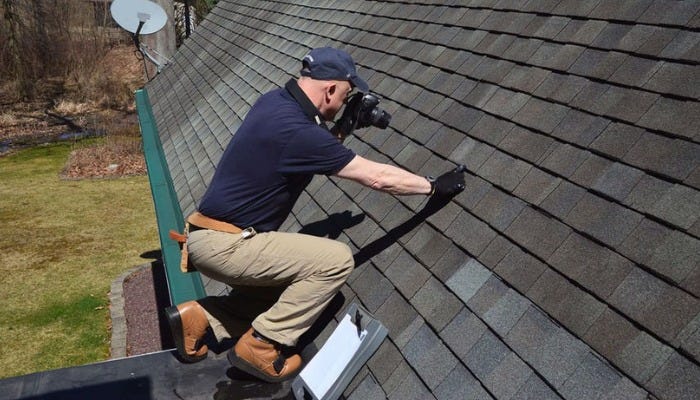
Photo documentation should include: the date of the storm event, photos of the ceiling stain inside the home, photos of any visible shingle damage from the ground, photos taken in the attic showing wet decking or rafter moisture, and if possible, photos taken on the roof surface of the specific failure point. This documentation establishes the connection between the storm and the damage before your insurance filing deadline closes.
Pro Craft provides written inspection reports with date-stamped photos for Toledo homeowners filing insurance claims after storm damage. That report is what your Ohio adjuster needs before approving the scope. Call 419.475.9600 within days of any significant Toledo storm event.
Tip 12 — When to Repair vs When to Replace a Leaking Toledo Roof
Not every roof leak means you need a new roof. Not every repair on a 20-year-old roof makes financial sense either. Here is the direct framework for making this decision on a Toledo home.
Repair is the right call when: The roof is under 15 years old. Damage is isolated to a single flashing point or a small shingle section. The decking underneath the damaged area is dry and structurally sound. The total repair cost is less than 25% of the full replacement cost.
Replacement is the right call when: The roof is over 20 years old with multiple active or recent leak points. Granules are filling the gutters after every rain event, indicating shingles have reached end of life across the full surface. The repair cost exceeds 30 to 40% of what a full replacement would cost. The decking inspection during repair reveals moisture damage covering more than one or two sections. Multiple ceiling stains have appeared in different rooms in the same season.
The honest answer Toledo homeowners do not always hear: A contractor who finds three separate active leak points on a 22-year-old Toledo roof and quotes you repairs on all three without mentioning replacement is taking your repair money and extending a roof that is going to produce more repairs within 12 to 24 months. Pro Craft gives you a direct answer after every free inspection on whether repair extends the roof’s serviceable life or whether you are spending money on a system that needs replacing. Written scope before any work starts either way. Call 419.475.9600.
How Much Does Roof Leak Repair Cost in Toledo, Ohio?
Toledo roof repair costs in 2026 based on real completed projects:
Minor repairs — Pipe boot replacement, single flashing repair, isolated shingle section: $200 to $800.
Moderate repairs — Chimney counterflashing replacement, valley flashing repair, multiple pipe boots: $500 to $1,500.
Extensive repairs — Storm damage covering multiple sections, decking repair, large flashing replacement: $1,000 to $3,000.
Emergency tarping — Applied immediately to stop active water entry while permanent repair is scheduled: $150 to $400 depending on roof size and access.
Roof replacement trigger point — When repair cost approaches 30 to 40% of full replacement cost on a roof over 15 years old, replacement is the financially sound decision. Full roof replacement in Toledo runs $8,000 to $20,000 for most residential homes.
Pro Craft provides free written estimates for every Toledo roof repair and replacement. Call 419.475.9600 or request a free inspection online.
Pro Craft Roof Leak Repair in Toledo, Ohio
We handle roof leak repair throughout Toledo and Lucas County with free inspections, photo documentation of every failure point, and written repair scopes before any work begins. Every repair uses materials and methods appropriate for Toledo’s climate. No roofing tar over failing joints. No surface-applied sealant as a permanent fix. Replacement of failed components with correctly installed flashing, pipe boots, and valley systems that hold through Toledo’s freeze-thaw cycling.
BBB A+ rated since 2005. Owens Corning Platinum Preferred. Phones answered 24 hours a day at 419.475.9600 for emergency roof leak calls throughout Toledo. Request a free inspection online.
Frequently Asked Questions
Why does my Toledo roof only leak when it rains hard?
Wind-driven rain during heavy Toledo storms forces water through flashing gaps that stay dry during light rain. Lake Erie wind events push rain horizontally at 40 to 60 mph against vertical surfaces. Flashing failures on west and north-facing planes are the most common source. The entry point does not drip during light rain because gravity alone is not enough to push water through the gap. Start your inspection at every flashing point on the windward side of the roof. Call 419.475.9600.
How do I find where my roof is leaking in Toledo?
Start in the attic, not at the ceiling stain. Look for wet decking, moisture staining on rafter surfaces, rust on nail heads, and daylight at the eave or ridge. Then check pipe boot collars above any bathroom ceiling stains, chimney counterflashing at all four faces, and valley flashing on complex rooflines. The stain inside the home is almost never directly below the entry point. Call 419.475.9600 for a free inspection with photo documentation of the actual entry point.
Can a roof leak be fixed from inside my Toledo home?
No. Interior repairs address cosmetic damage only. Replacing drywall or painting over a water stain does not stop water from entering the roof assembly. The entry point is on the exterior roof surface and requires exterior repair to fix permanently. Interior repairs on an active exterior leak create conditions for mold growth behind the finished ceiling surface. Call 419.475.9600 to find and fix the actual entry point.
How much does roof leak repair cost in Toledo Ohio?
Minor repairs run $200 to $800. Moderate chimney and flashing repairs run $500 to $1,500. Extensive storm damage repairs run $1,000 to $3,000. Emergency tarping runs $150 to $400. When repair cost approaches 30 to 40% of full replacement cost on a roof over 15 years old, replacement is the better financial decision. Free written estimate from Pro Craft before any commitment. Call 419.475.9600.
What is the difference between an ice dam leak and a rain leak on a Toledo roof?
Ice dam water intrusion appears in January and February after snow events and shows as ceiling stains near exterior walls and eaves. Rain leaks appear during rain events regardless of temperature at any ceiling location. Ice dam water intrusion requires blown-in attic insulation to R-49 to fix permanently. Rain leaks require finding and replacing the specific failed flashing component. Patching shingles fixes neither problem permanently. Call 419.475.9600.







Leave a Reply