
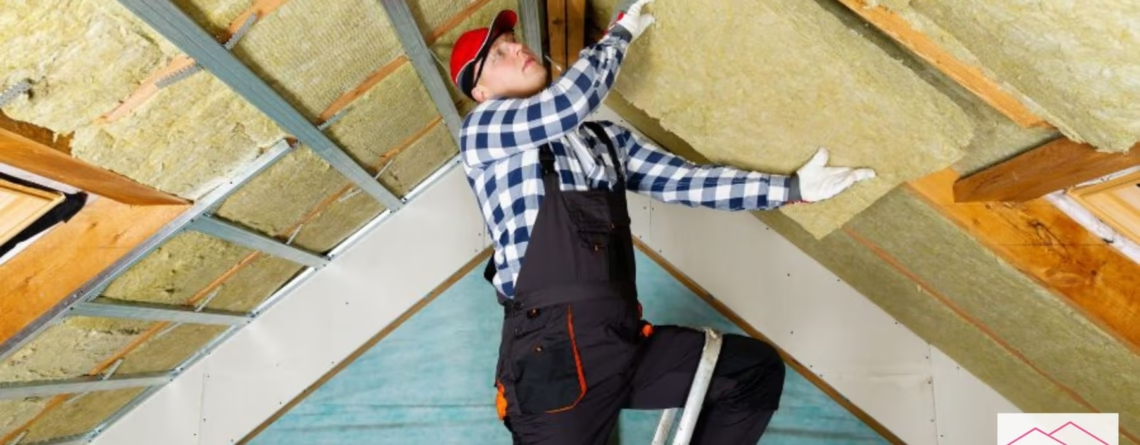
Is Your Attic Ventilation Working? A Toledo Homeowner’s Guide
Your attic ventilation is failing if you have ice dams at the eaves every winter, energy bills spiking in summer, moisture stains on attic sheathing, or shingles curling on a roof under 15 years old. In Toledo, Ohio, Climate Zone 5, a balanced ventilation system needs continuous soffit intake, ridge vent exhaust, and clear baffle channels from eave to ridge. Without this balance, your roof ages faster, your insulation loses effectiveness, and your roofing warranty can be voided.
How Attic Ventilation Works
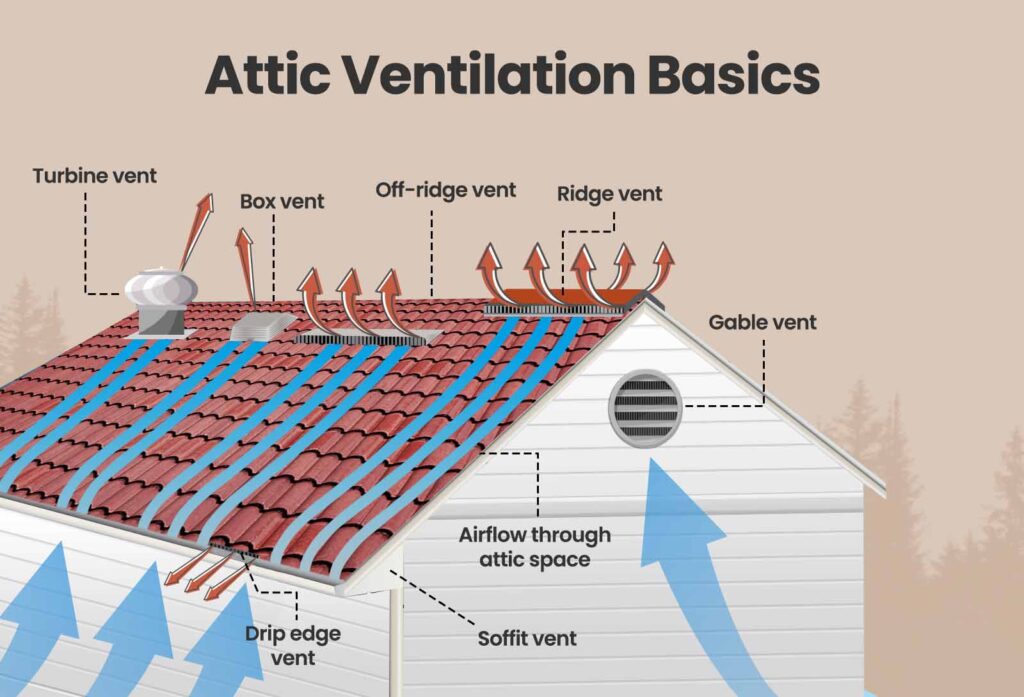
Attic ventilation is a two-part system. Cool air enters through soffit vents at the eave, travels up through baffle channels along the roof deck, and exhausts out through ridge vents at the peak. This airflow keeps the roof deck temperature uniform in winter and removes heat buildup in summer.
The balance between intake and exhaust is what makes it work. A ridge vent with blocked soffit vents does nothing. Blocked soffits with working ridge vents create negative pressure that pulls conditioned air from inside the living space into the attic. Most Toledo homes built before 2000 use undersized gable vents instead of a balanced soffit and ridge vent system, which means they are running below Ohio’s minimum ventilation requirements from the day they were built.
Signs Your Attic Ventilation Is Failing in Toledo
Toledo’s freeze-thaw cycling and lake-effect snow create specific failure patterns that warmer Ohio markets never see. These are the signs that your ventilation system is not working.
Ice dams at the eaves every winter. This is the clearest sign of ventilation failure in northwest Ohio. When warm attic air heats the roof deck unevenly, snow melts at the upper slope and refreezes at the cold eave. The ice ridge forces water under the first course of shingles and into the roof decking. If you see ice dams forming on the same section of roof every winter, the problem is not your shingles. it is heat escaping through an underventilated and underinsulated attic.
Shingles curling or blistering before 15 years. When heat is trapped in the attic, it softens the shingle adhesive from the underside. The shingle tabs lose their bond and begin to lift at the edges. A roof replacement on a 10-year-old roof in Toledo is almost always the result of inadequate exhaust ventilation cooking the shingles from below.
Attic temperature significantly higher than outside air in summer. A properly ventilated attic stays within 10 to 15 degrees of outside air temperature. When soffit vents are blocked or exhaust capacity is insufficient, summer attic temperatures in Toledo can exceed 130 to 150 degrees. That heat transfers into the living space, forces your HVAC to run harder, and drives up energy bills from June through August.
Condensation, rust stains, or dark streaking on attic sheathing. Warm humid air from inside the house rises into the attic through ceiling penetrations. Without adequate exhaust, that moisture condenses on cold sheathing and rafter surfaces in winter. Rusty nail heads, dark wood staining, and soft spots in the decking are signs of chronic moisture accumulation that leads to mold and structural wood rot if left unaddressed.
Insulation packed against the eave blocking soffit intake. Go into your attic with a flashlight and look toward the eave. If insulation is pushed tight against the roof deck at the corners with no visible channel above it, your soffit intake is blocked. No air enters. The entire ventilation system is choked regardless of how many vents are on the ridge.
Why Toledo Homes Are Especially Vulnerable
Toledo sits in Ohio Climate Zone 5. The Department of Energy recommends attic insulation targets of R-49 to R-60 for Zone 5 homes. Most Toledo homes built before 1990 have R-19 to R-30. That gap is why so many Toledo homeowners deal with ice dams, high heating bills, and premature asphalt shingle failure year after year.
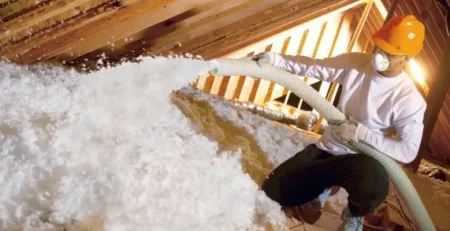
Ventilation alone does not fix this problem. The heat driving ice dam formation comes from the living space below through an underinsulated attic floor and unsealed ceiling penetrations — light fixtures, attic hatches, and plumbing chases. Sealing those air leaks and bringing insulation to R-49 stops heat loss at the source. Blown-in attic insulation addresses both problems at once. Ventilation then keeps the roof deck temperature uniform by removing residual heat that does reach the attic space.
How to Check Your Attic Ventilation Right Now
Toledo homeowners can do a basic assessment without getting on the roof.
Check soffit vents from inside the attic. Look toward each eave during daylight. You should see light through the soffit openings or baffle channels. If insulation is packed to the roof deck at the edges with no visible channel, soffit intake is blocked.
Check whether baffles are installed. Baffles are foam or cardboard channels that run from the soffit vent opening up to the open attic space above the insulation line. Without baffles, insulation blocks the entire intake airflow path. Many Toledo homes built before 1990 have no baffles.
Measure insulation depth. R-49 in blown-in fiberglass is approximately 15 inches deep. R-30 is approximately 10 inches. If your insulation is under 10 inches, you are losing heat through the attic floor every winter regardless of ventilation configuration.
Check for moisture or staining. Dark streaks on attic sheathing, rust below nail heads, and soft spots when pressing on the decking are signs of chronic moisture from inadequate exhaust ventilation. These require a professional assessment before the next roof repair or replacement is scheduled.
How Pro Craft Fixes Attic Ventilation Problems in Toledo
Pro Craft Home Products assesses attic ventilation on every roofing inspection in Toledo. When ventilation deficiencies are contributing to ice dam damage, premature shingle aging, or moisture accumulation, we fix the full system, not just the visible symptom on the roof surface.
Soffit vent clearing and baffle installation. Blocked soffit intake is the most common ventilation problem on Toledo homes. We clear blocked vents, install baffles that maintain the airflow channel from eave to ridge, and pull insulation back from the eave to restore intake capacity.
Continuous ridge vent installation. Replacing inadequate box vents with a continuous ridge vent improves exhaust capacity and distributes roof deck temperature more evenly. This is the most effective passive exhaust configuration for Toledo’s climate and is standard on every roof replacement Pro Craft completes.
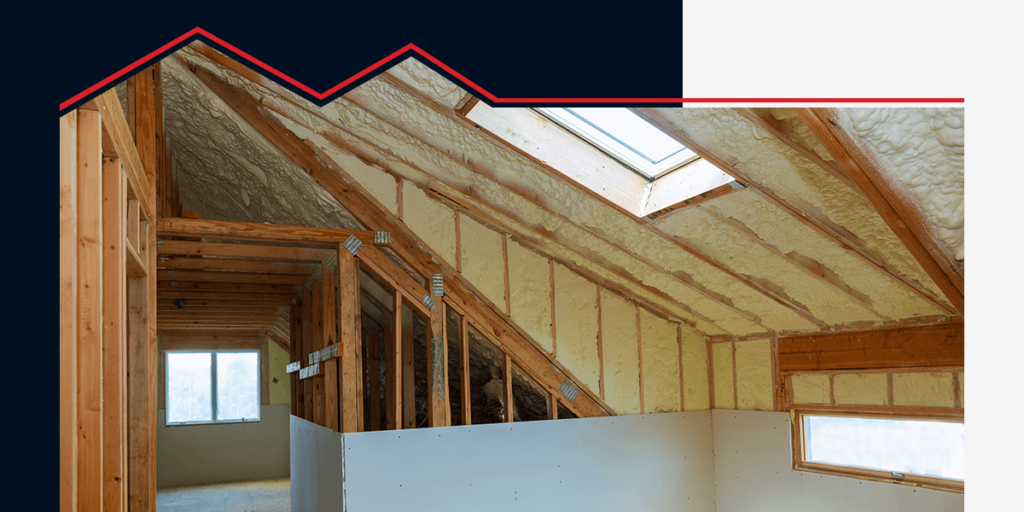
Blown-in attic insulation. Bringing attic insulation to R-49 or R-60 stops heat loss through the attic floor that drives ice dam formation and high heating bills. We install blown-in insulation after ventilation corrections so the airflow channel is clear before insulation is added.
Roof deck and sheathing repair. When years of moisture from poor ventilation have compromised the decking, we assess and repair affected sections during residential roofing replacement or as a standalone repair. Replacing shingles over wet decking produces the same result within two to three winters.
Attic Ventilation and Your Roofing Warranty
Owens Corning and most shingle manufacturers require adequate attic ventilation as a condition of the product warranty. If premature shingle failure is traced to inadequate ventilation at the time of installation, the warranty claim can be denied. This matters specifically for Toledo homeowners who invest in a premium asphalt shingle roofing system expecting the stated warranty term.
As an Owens Corning Platinum Preferred contractor, Pro Craft assesses and corrects ventilation deficiencies on every roof replacement in Toledo before new material is installed. We document the ventilation configuration as part of every job so the enhanced SureStart Plus warranty we provide is not at risk from a ventilation issue discovered during a claim.
Get a Free Attic and Roof Inspection in Toledo
Pro Craft provides free attic and roof inspections throughout Toledo and Lucas County. We assess ventilation balance, insulation depth, soffit and ridge-vent condition, and decking moisture, and provide you with a written report before any estimate is presented.
Call 419.475.9600 or request your free inspection online. Phones answered 24 hours a day, 7 days a week.
Frequently Asked Questions
How do I know if my attic ventilation is working properly?
The clearest indicators are: no ice dams along the eave edge in winter, no moisture staining or mold on decking or rafters, attic temperature within 10 to 15 degrees of outdoor temperature, and no unusual energy bill spikes. From inside the attic you should be able to see daylight through the soffit vents and feel air movement when outdoor wind is present.
Can poor attic ventilation void my roofing warranty?
Yes. Most manufacturer warranties for asphalt shingles require that the installed ventilation meets the 1:150 or 1:300 net free area ratio standard. If a warranty claim is filed and the inspection finds the ventilation was non-compliant at the time of installation, the claim can be denied. Pro Craft assesses ventilation compliance on every roof replacement before new material is installed.
Does adding more vents fix poor attic ventilation?
Not always. Adding exhaust vents without sufficient intake, or adding intake without adequate exhaust, creates an imbalanced system that performs worse than a smaller but balanced system. The fix needs to address both sides of the airflow equation. A professional assessment tells you which side is deficient before any vents are added.
Is poor attic ventilation causing my ice dams in Toledo?
In most cases, yes. Ice dams in Toledo homes are almost always a combination of inadequate attic insulation and inadequate ventilation allowing heat to escape through the roof deck unevenly. Blown-in insulation reduces the heat transfer. Proper ventilation keeps the attic temperature uniform so snow melt happens evenly rather than concentrating at the mid-roof and refreezing at the eave.
Can I fix attic ventilation myself?
Clearing blocked soffit vents of debris or insulation with proper baffles installed is within DIY range. Adding or replacing ridge vents, correcting an imbalanced system, or addressing ventilation as part of a roofing project requires a licensed contractor. Incorrect ventilation installation can make the system worse and void roofing warranties.
How much does fixing attic ventilation cost in Toledo?
Minor corrections like clearing blocked soffits and installing baffles run $200 to $600. Adding ridge vent to an existing roof during a repair runs $400 to $900 depending on run length. A full ventilation correction as part of a roof replacement is typically included in the project scope. Pro Craft provides written estimates after the free inspection so you know the exact cost before committing.
Does Pro Craft handle both roofing and attic insulation in Toledo?
Yes. Pro Craft handles roof repair, roof replacement, and blown-in insulation so both sides of the attic system can be addressed in one project without coordinating separate contractors.
Get a Free Attic Ventilation and Roof Inspection in Toledo
If any of the signs in this article apply to your home, a professional inspection is the correct next step. Pro Craft provides free written inspections covering the full roof system including ventilation, insulation, decking condition, shingles, and gutters.
Call 419.475.9600 or schedule your free inspection online. We serve Toledo and northwest Ohio including the full Ohio service area.
We also handle gutters, gutter guards, windows, and siding so the full exterior system is handled by one contractor.






Leave a Reply